



Sportswear fabrics – which ones are best for the gym, competitive sports, and outdoor activities?
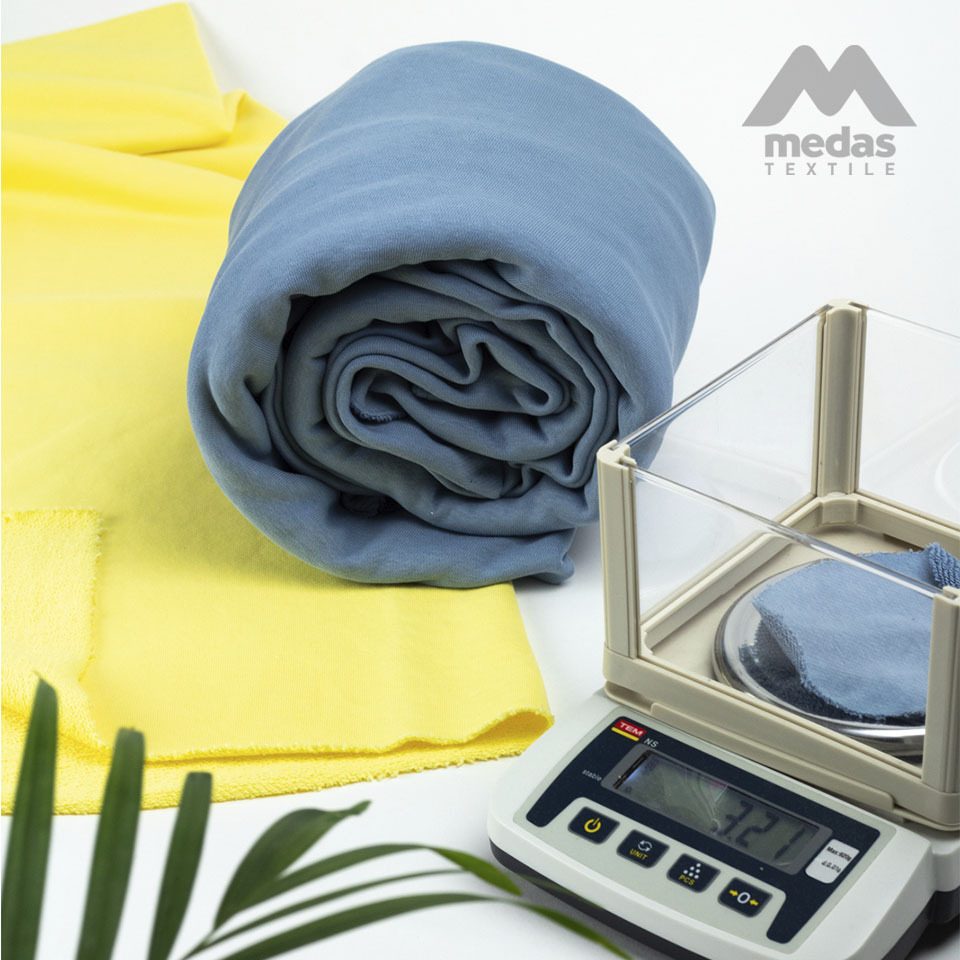
Sportswear fabrics are the foundation of a well-designed training, outdoor, and performance apparel collection. They determine whether the final product supports the body in motion or becomes a source of discomfort. The choice of the right knit affects breathability, moisture-wicking speed, stretch resistance, color durability, and even user skin safety.
At Medas Textile, we have been supplying high-quality knitted fabrics to clothing manufacturers in Poland and across Europe since 1997. We combine experience, strict quality control, and a wide material range—from technical synthetics to natural cotton yarns and premium knits. In this article, we take a detailed look at which sportswear fabrics perform best in specific conditions: at the gym, in competitive sports, and in outdoor activities.
Table of Contents
- Why are sportswear fabrics so important?
- Best gym clothing – which sportswear fabrics to choose
- Best running apparel – which materials ensure lightness and ventilation?
- Sportswear fabrics in competitive sports – durability, compression, and resistance
- Sportswear fabrics in outdoor activities – layering, membranes, and merino
- Cotton vs. sportswear fabrics – when does a natural fiber make sense?
- Single jersey and premium knits in sports collections
- Comparison table – properties of sportswear fabrics
- How to choose sportswear fabrics for specific disciplines and conditions?
- FAQ – frequently asked questions about sportswear fabrics in practice
Why are sportswear fabrics so important?
In sports, clothing is not just an aesthetic element—it is a tool. Poorly chosen fabric can trap moisture, cause overheating, chafe, or lose its shape after just a few washes. Well-selected sportswear fabrics act like a second skin—they regulate temperature, support muscles, and remain lightweight even during intense activity.
Modern sportswear is primarily based on synthetics such as polyester, polyamide, elastane, and polypropylene. Each of these fibers contributes different properties. Polyester provides lightness and quick drying, polyamide ensures mechanical strength, elastane offers elasticity, and polypropylene excels at moisture transport.
At Medas Textile, we place great emphasis on yarn quality. High-grade raw materials, rigorous production control, and OEKO-TEX® Standard 100 certification ensure that our sportswear fabrics meet the expectations of both designers and end users.
Best gym clothing – which sportswear fabrics to choose
The best gym clothing must be elastic, resistant to intense stretching, and able to withstand frequent washing. Strength training, fitness, and cross-training put heavy demands on fabrics—from deep squats to dynamic arm movements.
In this category, blends of polyester or polyamide with elastane dominate. Elastane—also known as Lycra or Spandex—provides stretch and a perfect fit. It ensures that leggings and tops do not deform, remain opaque, and retain their original shape even after many wash cycles.
Polyester is the most commonly used fiber in sportswear. It does not absorb water, efficiently wicks sweat, and dries quickly. One drawback may be static buildup, but proper finishing significantly reduces this effect. Polyamide, on the other hand, is more resistant to abrasion and mechanical damage, making it ideal for compression wear and high-friction areas.
For less intensive collections such as athleisure, single jersey knits—especially with elastane—offer comfort, lightness, and an appealing look for sports T-shirts.
Best running apparel – which materials ensure lightness and ventilation?
The best running apparel should be extremely lightweight, breathable, and quick-drying. Running generates continuous sweat and significant temperature fluctuations, especially in outdoor training.
Technical polyester with a mesh structure, fabrics like CoolMax, and ultra-light PES-elastane blends are commonly used. Fabric structure is crucial—perforations or mesh construction increase airflow and accelerate moisture evaporation.
For long-distance running and competitions, color stability and UV resistance also matter. Polyester performs well under sun exposure and resists fading better than many other fibers.
In cooler conditions, base layers are often made from polypropylene. This extremely lightweight material features capillary channels that efficiently transport moisture. It is often enhanced with silver ions, providing antibacterial properties and reducing odor formation.
Sportswear fabrics in competitive sports – durability, compression, and resistance
In competitive sports—such as combat sports, team sports, or extreme trail running—sportswear fabrics must withstand much higher stress. Intense stretching, ground contact, and frequent washing require high mechanical durability.
Heavier technical knits, typically 220–260 g/m², with 10–20% elastane are commonly used. These materials must provide compression, support muscles, and still allow full freedom of movement.
In garments with sublimation printing, polyester blends are essential. The print penetrates the fiber structure, making it durable, crack-resistant, and resistant to peeling even under heavy use. This solution is especially valued in teamwear and performance apparel.
For premium collections, it is worth considering high-end knits that combine superior yarn quality with advanced finishing techniques.
Sportswear fabrics in outdoor activities – layering, membranes, and merino
Outdoor activities require a different approach to garment design. The key concept is layering.
The base layer manages moisture, the mid layer provides insulation, and the outer layer protects against wind and rain. Waterproof membranes such as GORE-TEX® are widely used in trekking and mountain apparel—they block water while allowing vapor to escape.
In cold conditions, merino wool performs exceptionally well. Its fibers are fine, soft, and non-irritating. Merino is breathable, provides thermal insulation, and naturally resists bacteria.
For outer layers, hardshell and softshell jackets are popular. Hardshell offers maximum protection against water and wind, while softshell is lighter, more flexible, and more breathable.
Cotton vs. sportswear fabrics – when does a natural fiber make sense?
Cotton is not recommended for intense workouts because it absorbs moisture and dries slowly. Wet cotton can lead to body cooling and discomfort.
However, in lifestyle sportswear, light activities, or homewear collections, cotton knits can perform well—especially when made from high-quality combed yarn.
Cotton provides softness, comfort, and good airflow. When blended with elastane, it gains elasticity and becomes suitable for lower-intensity activities.
Single jersey and premium knits in sports collections
Single jersey is one of the most versatile knits used in sportswear. In its cotton version, it works well in casual collections, while elastane blends can serve as a base for lightweight training T-shirts.
Premium knits stand out for dimensional stability, color durability, and a pleasant hand feel. At Medas Textile, we offer a wide color range—over 80 shades available immediately—and low minimum orders starting from a single roll.
Comparison table – properties of sportswear fabrics
Material | Breathability | Quick-drying | Elasticity | Main use
- Polyester | high | very high | medium | gym, running
- Polyamide | high | high | medium | compression, swimwear
- Elastane | – | – | very high | leggings, tops
- Polypropylene | very high | very high | medium | thermal underwear
- Merino wool | high | medium | low | outdoor, winter activities
- Cotton | medium | low | low | lifestyle, light activity
How to choose sportswear fabrics for specific disciplines and conditions?
Material selection should always consider:
- intensity of activity,
- weather conditions,
- frequency of washing and use,
- requirements for printing or customization.
Clothing manufacturers should analyze not only fiber composition but also fabric weight, structure, and finishing. At Medas Textile, we support our clients at every stage—from sample selection to fast order fulfillment. We operate in Poland and Turkey, offering efficient logistics and even same-day shipping.
Ultimately, it is the right choice of sportswear fabrics that determines the quality of the final product and how it is perceived by the user.
FAQ – frequently asked questions about sportswear fabrics
Which fabrics are best for gym clothing?
Blends of polyester or polyamide with elastane are the best choice—they provide elasticity, durability, and quick drying.
Should the best running apparel be made of cotton?
No. The best running apparel is based on technical polyester or elastane blends that efficiently wick moisture.
Do sportswear fabrics for outdoor use differ from those for the gym?
Yes. Outdoor clothing uses layering systems, membranes, and often merino wool to provide protection against weather conditions.
Are cotton knits suitable for sportswear?
They are not recommended for intense sports but can be a good option for lifestyle and light activities.